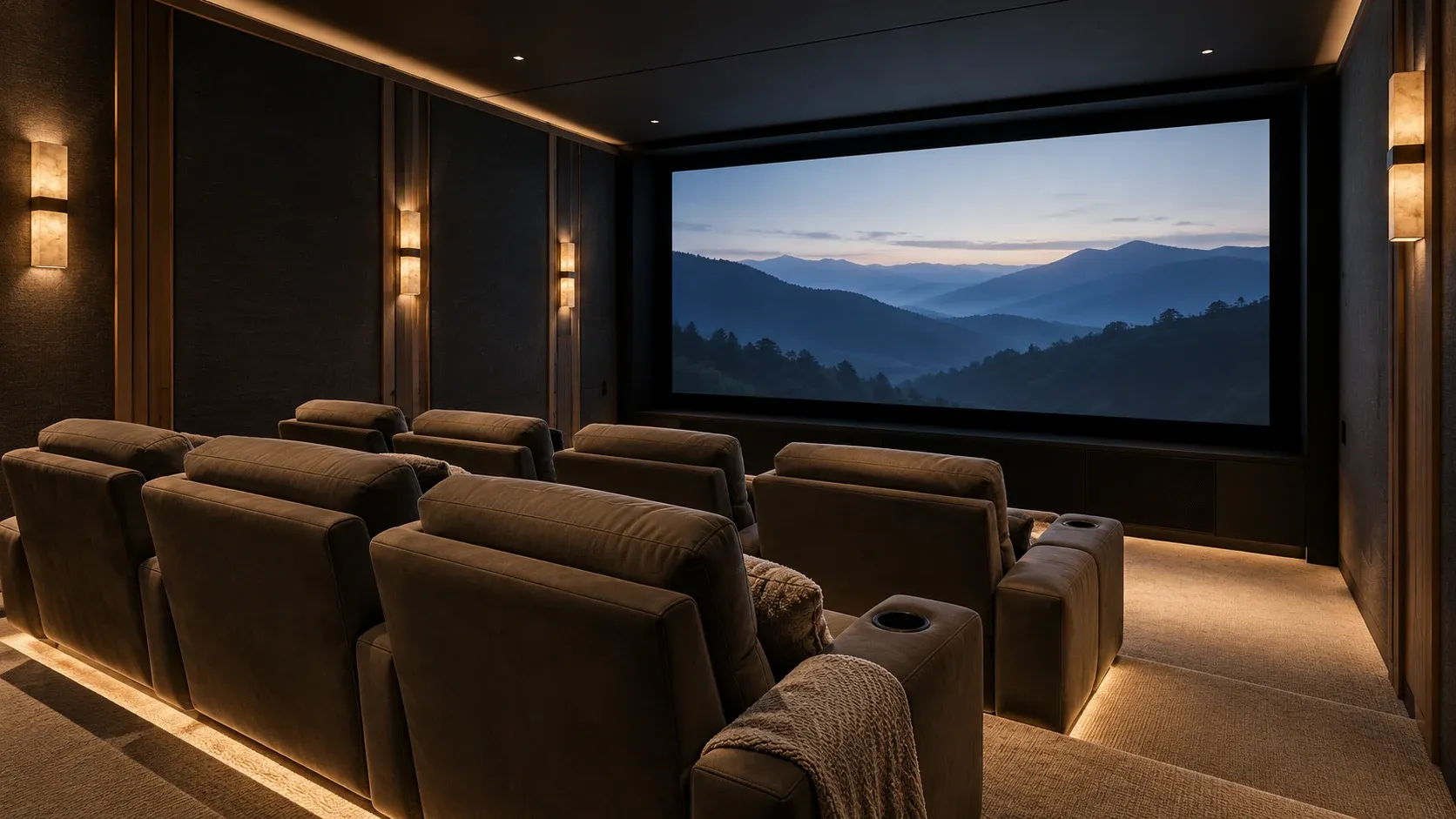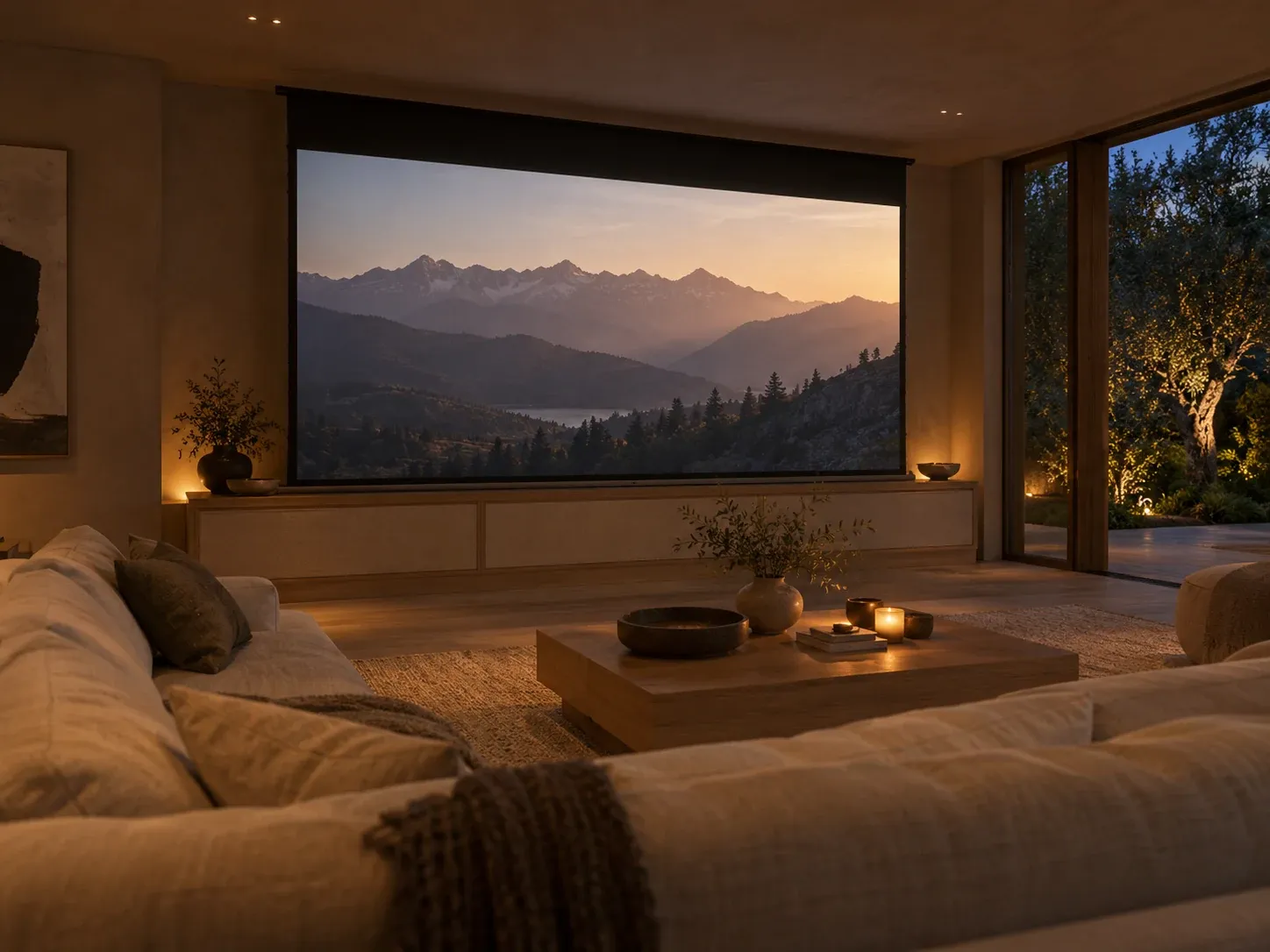
Designing light for the hours after dark
Evening light should lead you gently through a home, not flood it. A practical guide to layers, warm color and the scenes our clients reach for most once the sun has gone.
Less light, placed with care
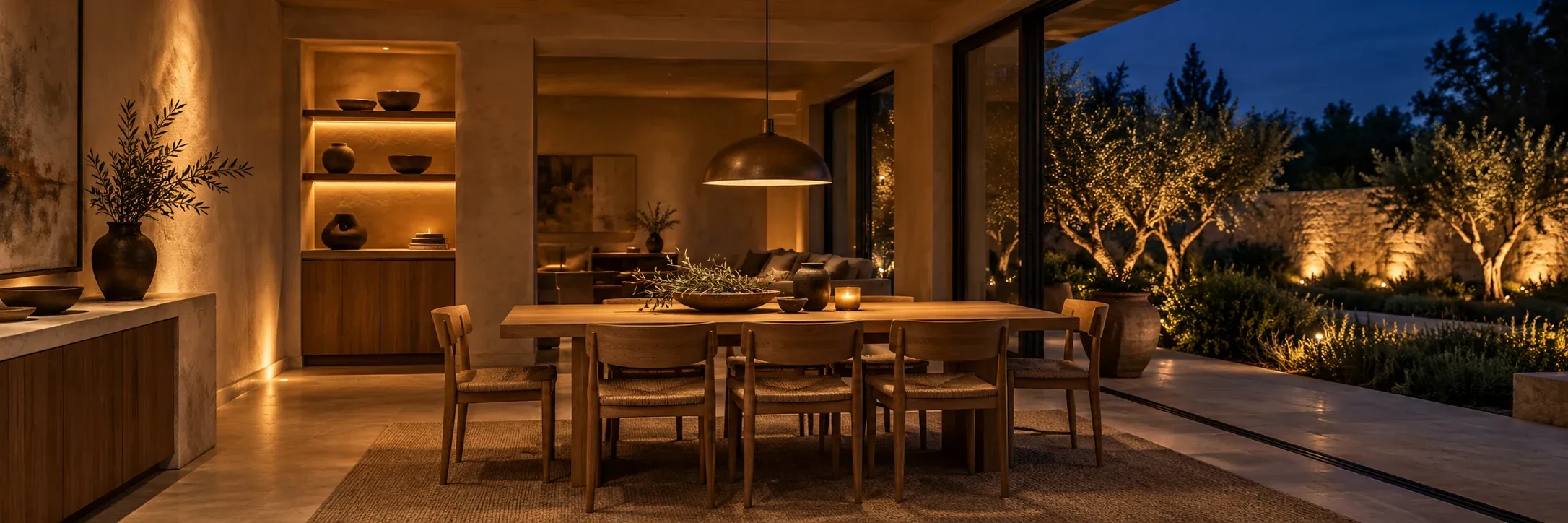
A ceiling full of downlights at full brightness may be practical for cleaning, but it flattens a room and keeps everyone awake. The homes that feel best after dark use far less light, placed far more carefully.
We design evening light in three layers: a soft wash across walls and ceilings, accents on what matters — a painting, the table, the island — and the light you bring close, from reading lamps to low step lights. Each is controlled on its own, so a room can change mood without anyone thinking about it.
Good evening light is mostly shadow, and the art is choosing what to reveal.
Don't forget the garden
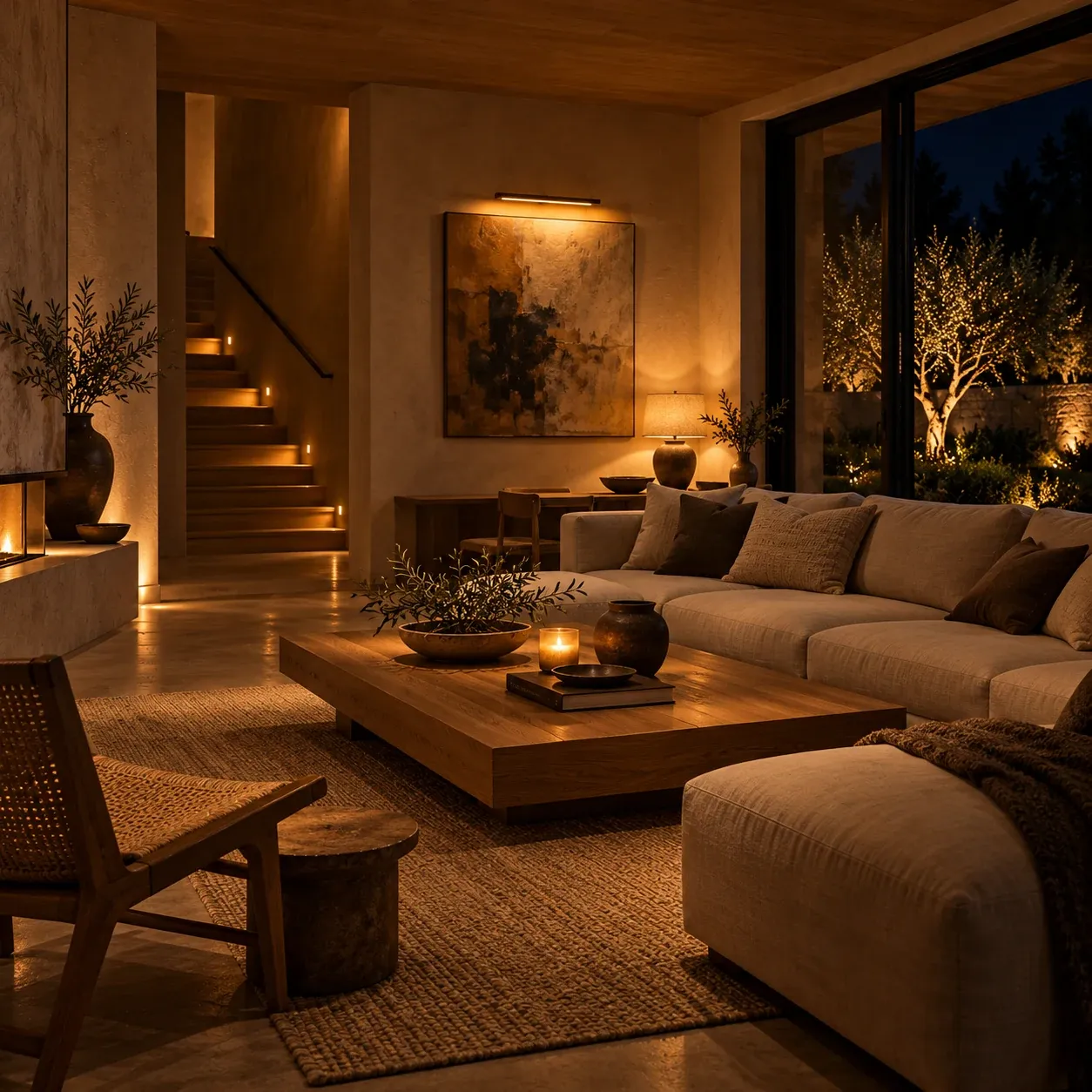
Glass becomes a mirror at night unless there's something to see on the other side. A few uplit trees, a lit wall at the end of the garden and soft path lights turn the windows back into views and make the whole home feel wider.
As the evening goes on, the scenes drift warmer and dimmer, from about 3000 kelvin at dinner to something close to candlelight by bedtime. Our clients' favorite scene is rarely the brightest: one press by the door that sets the house for the evening and leaves the garden glowing.