A cinema that disappears by day
Acoustic panels behind linen, a screen that rises from the joinery, seats that never feel like a showroom. How a family room becomes a private cinema at the touch of one key.
A family room first, a cinema second
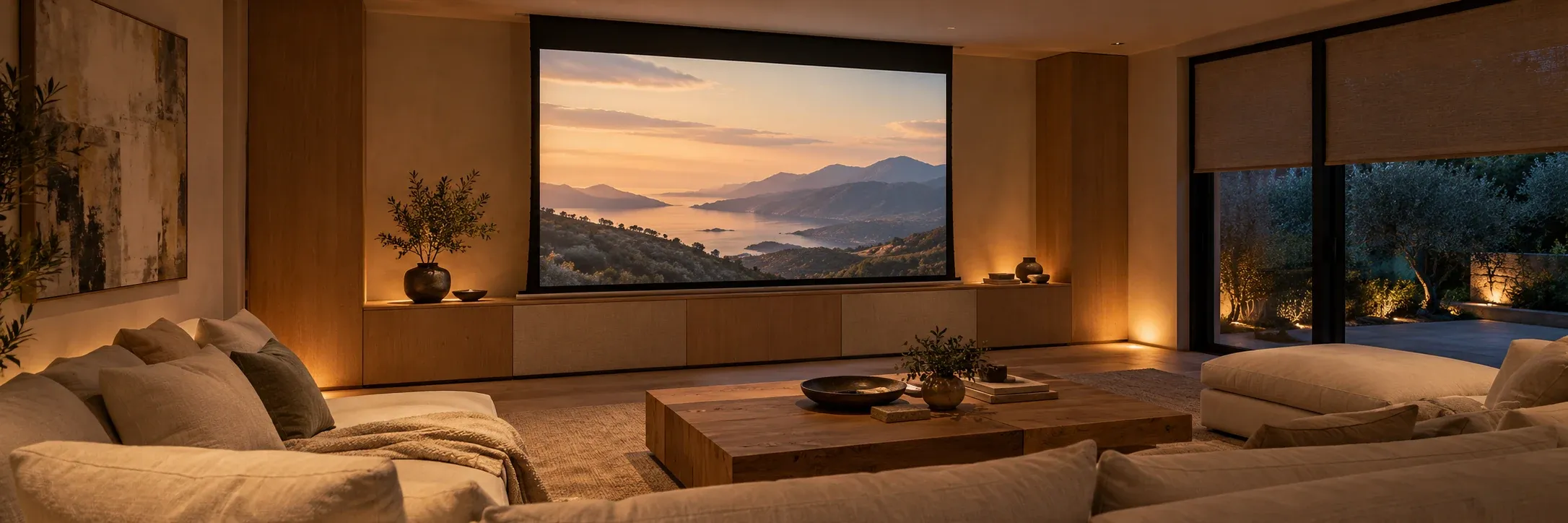
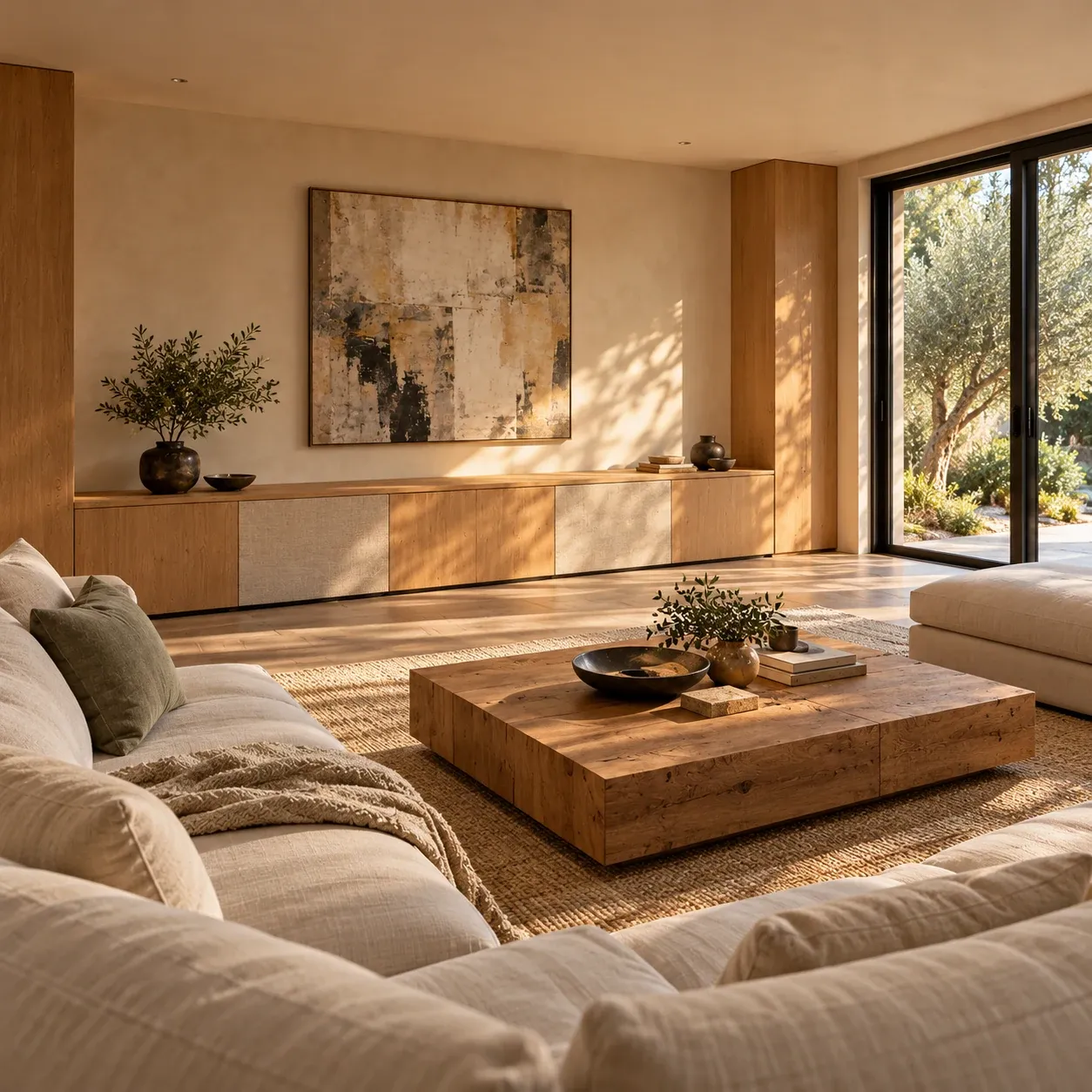
The brief came from a family room on the lower floor: deep sofas, a wall of oak joinery, doors to the garden. It was where everyone gathered, which is exactly why the family wanted films to happen there, rather than in a dark room nobody visited.
They wanted reference-quality picture and sound, and a room that never looked like a cinema for the other twenty-two hours of the day. Our job was to give them both without changing the character of the space.
By day, homework at the table. By eight, the best seat in the city.
One key, and the room changes
The speakers and acoustic treatment hide behind fabric-wrapped panels that read as part of the joinery; the subwoofers are built into its base and the screen rises from a slot along the top. The projector lives in a ventilated cabinet at the back of the room, behind a door that closes.
A single keypad by the sofa starts the evening: shades come down, the lights fade to a glow at floor level, the screen rises and the system wakes. Pausing brings the step lights up; ending the film puts the room back as it was. The children learned it in a day.